The waste management sector is undergoing a significant shift.
Across the UK, operators are investing heavily in fire prevention and suppression systems in response to a growing and well-documented risk. At the centre of this change is the increasing presence of lithium-ion batteries in the waste stream, creating new challenges for facilities, operators and emergency services alike.
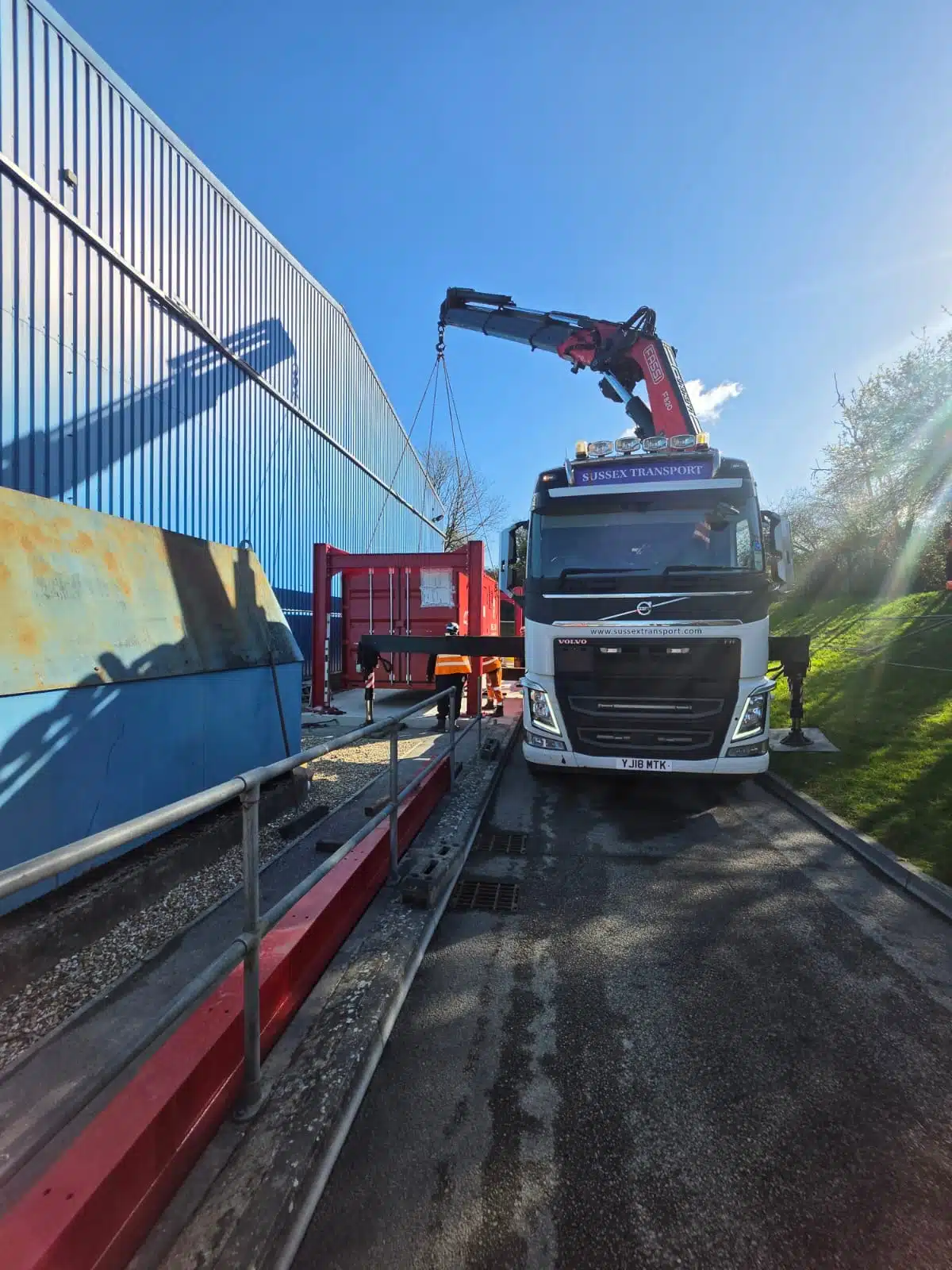
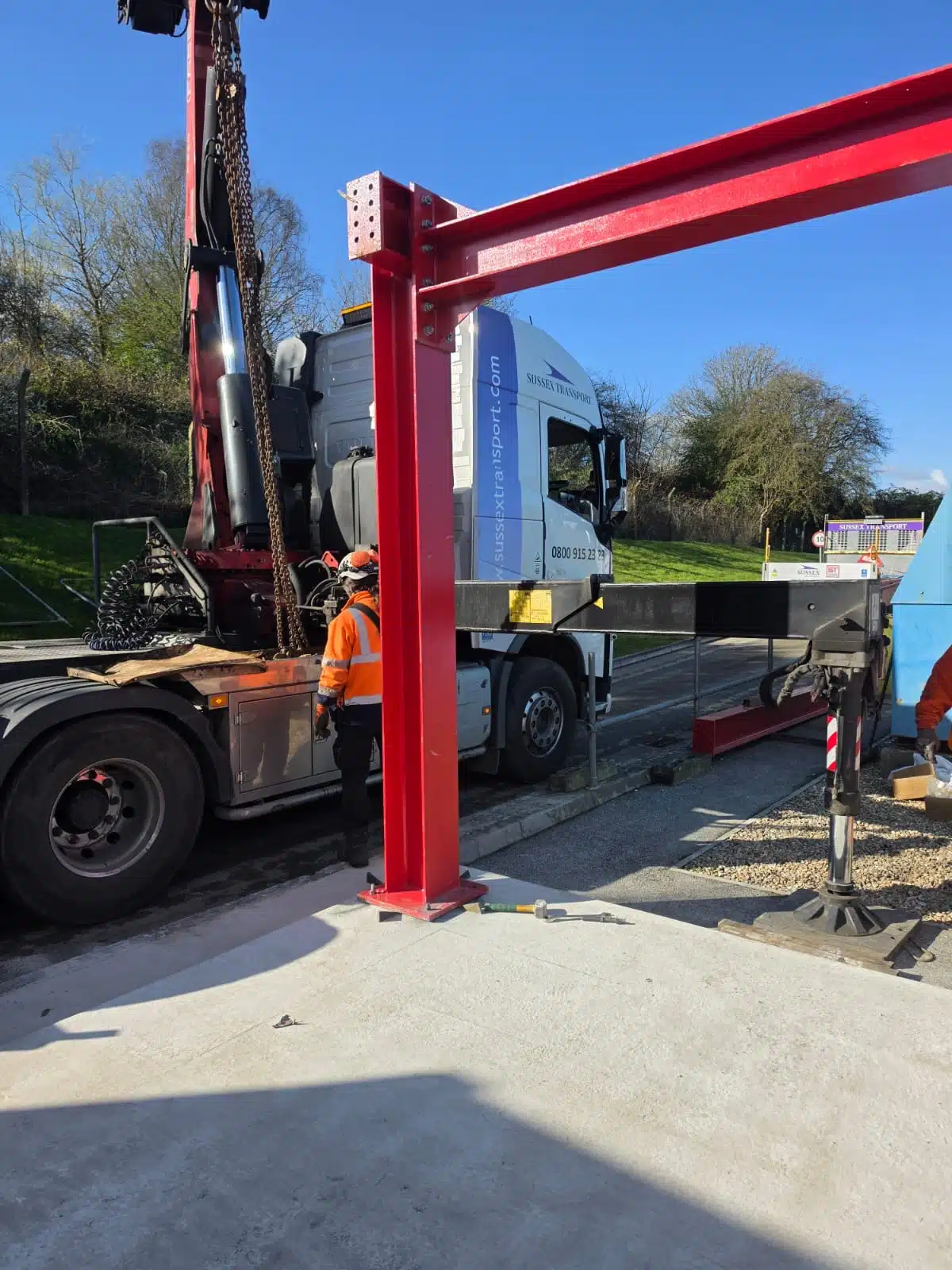
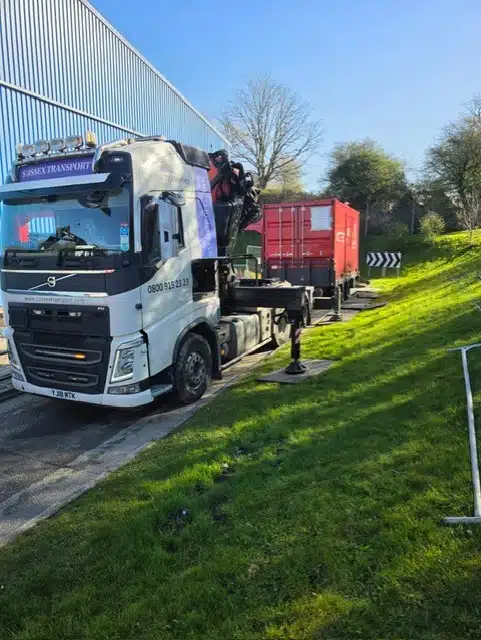
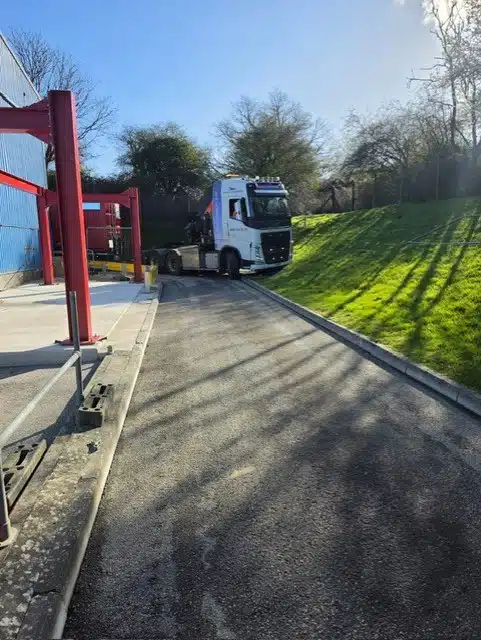
At Sussex Transport, we have recently supported projects at waste and recycling facilities as part of this wider industry response, assisting with the delivery and positioning of containerised fire suppression infrastructure.
The Growing Risk Facing Waste Facilities
Lithium-ion batteries are now found in a wide range of everyday products, from mobile phones and laptops to vapes and household electronics.
When these batteries enter the waste stream and become damaged, they can ignite, often without warning. These fires are particularly difficult to control, with the ability to reignite and produce prolonged heat and smoke.
Recent industry data highlights the scale of the issue, with fires in waste facilities increasing significantly in recent years, prompting operators to take action and invest in preventative infrastructure.
A New Generation of Fire Suppression Systems
To address this risk, waste operators are introducing advanced fire suppression and prevention systems designed specifically for waste environments.
These systems typically include:
- Infrared heat detection technology
- Automated monitoring of waste stockpiles
- Early intervention through water cannons or suppression systems
- Containerised pump stations and infrastructure
In many cases, key elements of these systems are housed within steel containers, forming part of a modular and scalable solution that can be installed within existing sites.
The Role of Logistics in System Installation
While much of the focus is on the technology itself, the successful rollout of these systems depends heavily on logistics. Waste sites are complex, live environments where:
- Operations continue throughout installation
- Access can be restricted
- Space is limited
- Safety is critical at all times
The delivery and positioning of containerised infrastructure, water tanks and associated equipment must be carried out with precision and coordination.
This is where experienced logistics support becomes essential.
How we are Supporting Installations at UK Waste Facilities
Sussex Transport has recently supported projects involving the installation of fire suppression systems at waste facilities, including local sites in Burgess Hill and Ford.
These projects involved:
- Delivery of containerised system components
- Positioning within operational waste environments
- Coordination with installation teams and site operators
- Working within restricted access and safety-controlled areas
Each project required careful planning to ensure minimal disruption to ongoing operations while maintaining the highest safety standards.
A Partner for Infrastructure Rollouts
As waste operators continue to invest in fire suppression systems across multiple locations, the need for reliable logistics support becomes increasingly important. For system manufacturers and installation partners, working with a transport provider who understands the below can make a significant difference to project delivery:
- Construction and industrial environments
- Specialist lifting and positioning
- Site access constraints
- Phased project rollouts
Supporting Future Projects
The rollout of fire suppression systems across the UK waste sector is ongoing, and likely to continue as operators respond to evolving risks and regulatory expectations.
Whether supporting individual site upgrades or wider infrastructure programmes, Sussex Transport is well positioned to assist with the delivery and positioning of containerised systems across Sussex, the South East and beyond.
If you are planning an installation or rollout, our team would be happy to discuss how we can support your project.