When your project involves lifting or repositioning heavy or awkward loads, selecting the right lifting provider is crucial.
The terms “crane hire” and “contract lift” often appear side by side, but they are not interchangeable.
Each comes with different responsibilities, insurance requirements, and levels of support. Choosing the wrong one can result in unexpected costs, delays, or even compliance issues.
At Sussex Transport, we deliver both lifting options across the South East.
We understand the differences in detail and help clients make the right choice to ensure their lifting operations are safe, compliant, and efficient.
This guide explains what a contract lift is, how it compares to crane hire, the legal requirements for each, and the key factors to consider when deciding which service is needed.
What Is a Contract Lift?
A contract lift is a fully managed service where the lifting provider takes complete responsibility for planning, executing, and insuring the lift (Subject to T&C’s).
This arrangement is ideal for clients who do not have the in-house expertise, insurance, or resources to manage the process themselves, and are looking for a fully managed, turnkey lifting solution.
With our contract lifts, you will receive a full service under the Construction Plant Hire Association (CPA) terms and conditions. We supply the Appointed Person who will be responsible for all aspects of planning and execution of the lift, the safe operation of the crane and the safety and welfare of the lifting team.
This provides the reassurance that the majority of the responsibilities, legal liabilities and potential financial risks sit with us, rather than you or your business.
We design a bespoke lift to meet your needs, delivered where and when you specify, by an expert team in the industry, using specialist best-in-class equipment.
Within this service we will undertake some or all of the following tasks for you, freeing you up to focus on other aspects of your project:
- Site visit if required/determine the scope of work.
- Selection of the most suitable lorry loader crane / mobile crane
- Designing Lifting Plans in line with current guidance
- Undertaking Risk Assessments
- Preparing Risk Assessments Method Statements (RAMS)
- Supplying Appointed Person / Lift Supervisor(s) / Slinger / Signallers
- Providing Additional Transport
- Co-ordinating Traffic management
- Arranging road closures and much more…
All Sussex Transport Contract Lifts are covered by our comprehensive insurance plan, providing full cover for your lifted goods and public liability. Plus, our team always follow the safe system of work, if we are in any doubts our team will stop and make the safe choice!
What Is Crane Hire?
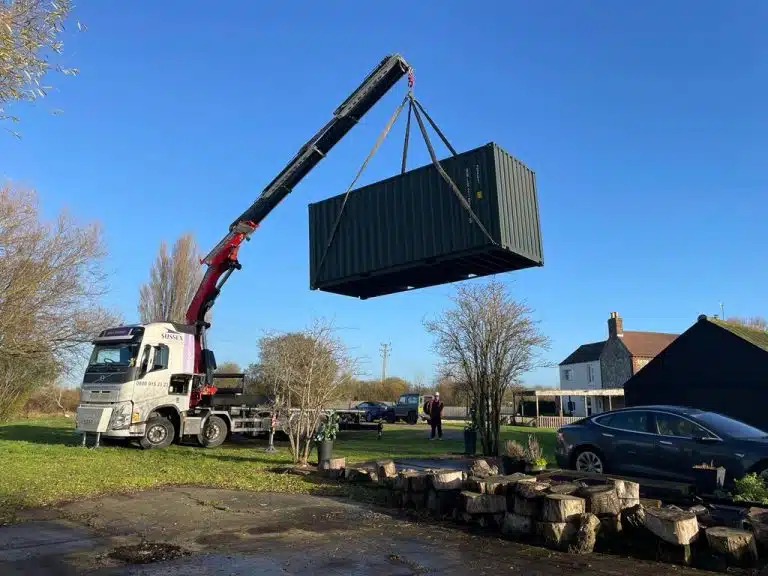
Crane hire (or CPA crane hire) is a simpler arrangement where the provider supplies the crane and operator, but the client retains responsibility for the lift’s planning and safe execution.
You must appoint your own Appointed Person, and procedures as well as suitable insurance cover.
Through the crane hire process under CPA (Construction Plant Hire Association) crane hire terms and conditions you would be fully responsible for the supervision of any work undertaken on-site and have full liability for the vehicle, operator, lifting operations as set out in your Risk Assessment Method Statement (RAMS).
You would therefore be responsible for:
- Providing insurance cover (usually referred to as hired-in plant insurance and third-party liability cover) for the crane and team while on your site.
- Preparing all the paperwork required, including Risk Assessment Method Statement (RAMS)
- Supplying an Appointed Person with experience and expertise in handling complex lifts, locations, and conditions to enable effective preparation and supervision for a safe lift to take place, including:
– Overseeing the planning
– Selecting a suitable crane
– Ensuring compliance with BS7121 and LOLER
– Knowledge of slinging and signalling duties - Providing a suitable lifting team to support the lift.
- Arranging Additional Transport
- Coordinating Traffic Management
- Arranging road closures.
In return, we will provide you with specialist best-in-class equipment and an expert qualified crane operator, who will follow your instructions capably and efficiently to your Risk Assessment Method Statement (RAMS).
Contract Lift vs Crane Hire – Key Differences
| Area of Responsibility: | Contract Lift | Crane Hire |
|---|---|---|
| Supply of Info for Lift & Ground | Customer | Customer |
| Site Visits / Scope of Work | Provider / Sussex Transport | Customer |
| Selection of Crane / Planning | Provider / Sussex Transport | Customer |
| Method Statement | Provider / Sussex Transport | Customer |
| Risk Assessment | Provider / Sussex Transport | Customer |
| Appointed Person | Provider / Sussex Transport | Customer |
| Slingers / Signallers | Provider / Sussex Transport | Customer |
| Insurance Cover: | ||
| Lifted Goods | Provider / Sussex Transport | Customer |
| Public Liability | Provider / Sussex Transport | Customer |
| Damage to Crane | Provider / Sussex Transport | Customer |
| Loss of Hire During Repairs | Provider / Sussex Transport | Customer |
NB: Regardless of the service you select, you will retain responsibility for the ground conditions at the berthing location of the crane/vehicle and the access/egress to and from the site.
The crucial distinction lies in who takes legal and safety responsibility.
A contract crane lift shifts this responsibility to Sussex Transport, while crane hire leaves it with you.
Contract Lift – Advantages
- Fully managed service with professional planning and execution
- Insurance included for load, crane, and third-party property (excluding ground conditions)
- Reduced risk of errors or delays due to inexperience
Legal and Safety Requirements for Lifting Operations
Both crane hire and contract lifting services in the UK are governed by strict safety legislation.
Key regulations include:
- LOLER – Ensures lifting operations are properly planned, supervised, and carried out safely
- PUWER – Requires equipment to be suitable, maintained, and used correctly
Choosing a contract lift ensures these requirements are met by the lifting provider, reducing your legal risk and ensuring compliance at every stage.
When to Choose a Contract Lift Service
Contract lifting is the preferred choice when:
- You do not have an Appointed Person on site
- The lift is complex, high-risk, or in a restricted space
- You lack the required insurance cover for lifting operations
- You want to reduce risk and outsource responsibility to trained professionals
Industries such as construction, manufacturing, logistics, and event staging frequently rely on contract lifting for precision, safety, and efficiency.
Questions to Ask Before Booking a Contract Lift
Before committing to a contract lifting service, consider:
- What is the weight and size of the load?
- Are there access restrictions at the site?
- What are the ground conditions where the crane will operate?
- Are there overhead obstructions such as power lines?
- Does the load require specialist lifting accessories?
Having this information ready will help your lifting provider plan the most efficient and compliant operation.
A Typical Contract Lifting Process: From Planning to Execution
- Initial Consultation – We discuss your project in detail, including load type, location, and deadlines.
- Site Survey – A thorough assessment of access, ground stability, and site constraints.
- Lift Planning – Creation of a compliant lift plan, method statement, and risk assessments.
- Execution – A qualified team carries out the lift precisely as planned.
- Completion – The load is safely positioned, and the site is left secure.
Speak to the Contract Lifting Experts
Whether you need a fully managed contract lift or straightforward crane hire, Sussex Transport delivers safe, compliant, and efficient lifting solutions.
Contact our contract lifts team today to discuss your requirements and request a free, no-obligation quote.